The Hidden Floors Nobody Talks About: Why Your Attic and Basement Are Running the Show on Home Health
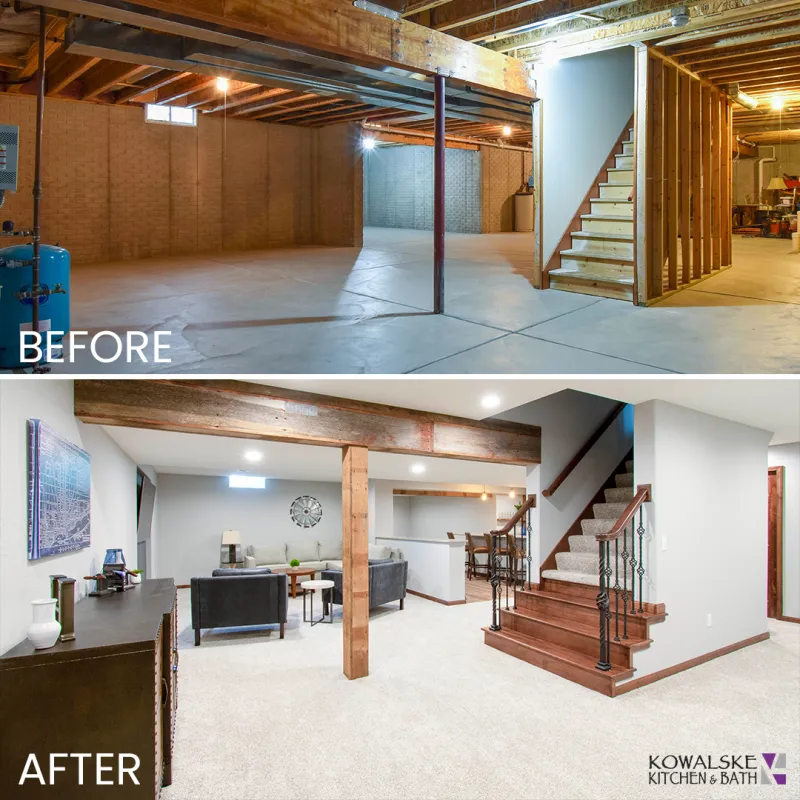
Photo: basement attic home inspection moisture mold ventilation, via kowalske.com
Every year, American homeowners pour billions of dollars into kitchen remodels—quartz countertops, induction ranges, custom cabinetry. And look, we get it. The kitchen is where life happens. But here's the thing nobody's saying at the open house: the spaces you never actually live in might be doing more damage to your family's health than anything happening in that gorgeous chef's kitchen.
Your basement and attic are the lungs and the foundation of your home's biological ecosystem. When they're struggling, the whole house struggles—often silently, over years, in ways that show up as chronic headaches, persistent allergies, or just that vague sense that something in your home feels... off.
Let's talk about what's really going on down there. And up there.
Air Moves From Bottom to Top — Always
There's a principle in building science called the stack effect, and once you understand it, you'll never look at your basement the same way again. Warm air rises. As it does, it pulls air upward through your home — from the basement, through the living spaces, and out through the attic. This means that whatever is in your basement air is almost certainly making its way into the rooms where your family eats, sleeps, and breathes.
Musty basement smell drifting up to the first floor? That's not just an aesthetic problem. That's mold spores, volatile organic compounds from deteriorating materials, and potentially radon gas hitching a ride straight into your living room.
The same dynamic plays out in reverse during summer months when attic heat radiates downward. A poorly ventilated attic sitting at 150°F on a July afternoon in Georgia or Texas isn't just making your AC work harder — it's stressing your roof structure, potentially off-gassing from roofing materials, and creating the kind of heat-moisture cycles that invite biological growth.
Radon: The Risk You Literally Can't See, Smell, or Taste
Let's be direct about this one. Radon is the second leading cause of lung cancer in the United States, responsible for about 21,000 deaths per year according to the EPA. It's a naturally occurring radioactive gas that seeps up from soil and rock, concentrates in low-lying spaces, and accumulates in homes with poor ventilation.
About 1 in every 15 U.S. homes has radon levels at or above the EPA action level of 4 picocuries per liter. And here's the kicker — you can't detect it without a test. No smell, no color, no warning signs.
If you haven't tested your basement for radon in the last two years (or ever), that's the single most important home health action you can take this weekend. Short-term test kits cost under $20 at most hardware stores. If your levels come back elevated, a professional mitigation system — essentially a pipe and fan that vents radon out before it can accumulate — typically runs $800 to $2,500. Compare that to the cost of a new backsplash, and the math writes itself.
Moisture Is the Real Villain in Both Spaces
Mold needs three things: organic material to feed on, the right temperature, and moisture. Your home provides the first two in abundance. Moisture is the variable you can actually control.
Basements are vulnerable because they're surrounded by soil that holds water. Even in homes without visible flooding, concrete and block walls wick moisture through a process called vapor diffusion. That humidity feeds mold colonies behind drywall, under carpet padding, and in the framing itself — often without producing any visible signs until the problem is well-established.
Attics face the opposite pressure. In winter, warm moist air from your living spaces rises and hits the cold attic floor (or ceiling deck, depending on how you think about it). When that air cools, moisture condenses. If your attic insulation is sitting on top of inadequate vapor barriers, or if your bathroom exhaust fans are venting into the attic instead of out of the house (a surprisingly common installation error), you're essentially running a humidifier up there all winter long.
What to look for:
- White, chalky staining on basement walls (efflorescence — a sign of water movement through masonry)
- Dark staining or soft spots on attic sheathing
- Frost buildup on attic surfaces in winter
- Musty odors anywhere in the house
- Peeling paint or bubbling drywall near floor or ceiling transitions
The Insulation Problem Nobody Wants to Talk About
Old insulation is one of the more underappreciated health hazards in American housing stock. Homes built before 1980 may have vermiculite insulation in the attic that's contaminated with asbestos. Fiberglass batts that have been compressed, wet, or disturbed over decades lose their effectiveness and can harbor biological growth. And spray foam that wasn't properly mixed or cured can off-gas isocyanates and other compounds for months.
Beyond the health angle, under-insulated attics and basements are massive energy drains. The Department of Energy estimates that air leaks and inadequate insulation account for up to 30% of home heating and cooling costs. Sealing and insulating these spaces isn't just a health investment — it's a financial one with measurable, year-over-year returns.
If you're in an older home, have your attic insulation assessed before you touch it. If there's any chance of vermiculite, call a certified asbestos inspector before doing anything else.
Strategic Investments That Actually Move the Needle
So what should you actually do? Here's a practical framework, roughly in order of impact:
- Test for radon. Do this first. It's cheap, fast, and the stakes are high.
- Address moisture sources. Grade soil away from your foundation. Extend downspouts. Install a quality dehumidifier in the basement (look for Energy Star certified models). Make sure bathroom and kitchen exhaust fans vent to the exterior.
- Audit your attic ventilation. A properly ventilated attic needs both intake vents (typically at the soffits) and exhaust vents (at the ridge or gable). If yours only has one or the other, you're not moving air effectively.
- Air seal before you insulate. Insulation without air sealing is like putting on a sweater with holes in it. Seal penetrations, gaps around pipes, and junction points between living space and these liminal zones.
- Consider a home energy audit. Many utility companies offer subsidized audits, and some states have rebate programs for insulation and sealing improvements. The Inflation Reduction Act also extended tax credits for energy efficiency improvements — worth checking with a tax professional.
The Two Healthy Homes Principle
We talk a lot on this site about the idea that a healthy home and a sustainable home aren't competing goals — they're the same goal approached from different angles. Nowhere is that more true than in your basement and attic.
Fixing moisture problems protects your family's respiratory health and extends the life of your building materials, reducing waste. Improving insulation cuts your carbon footprint and lowers your utility bills. Addressing radon saves lives and makes your home more marketable if you ever sell.
The kitchen renovation might photograph better for the listing. But the work you do in the spaces nobody sees? That's what makes a house genuinely livable — for you, for the people you love, and for the next family who calls it home.